

NaMongProduction
How AI individualizes exercise plans
04/08/2026
Our article outlines the benefits of AI-based exercise planning and presents two examples from practice.
Diagnostic information directly from exhaled breath
29/07/2026
Researchers are using breath to analyze metabolic biomarkers, patterns, and lung functions for diagnostic applications.
From glucose tracking to connected diabetes care
08/07/2026
Recent developments highlight how new capabilities are extending the role of CGM across the care pathway.
Residential modules and mobile diagnostics in care
01/07/2026
Two projects demonstrate how care, diagnostics, and telemedicine collaboration can be integrated into the home environment.
CareVolutionAI: smart sensors support care
23/06/2026
CareVolutionAI is investigating how AI-powered sensor technology can assist in care and promote data-driven care processes.
Diagnostics moves closer to treatment pathways
11/06/2026
Diagnostics is embedding new technologies directly into treatment pathways, supporting clinicians during care.
College of Design and Engineering, NUS
Wearable sensor with AI detects fatigue and stress
30/03/2026
Researchers developed a wearable sensor that enables continuous monitoring of fatigue and stress, even during movement.
Erik Strandberg/Chalmers
Compact biosensors for decentralized diagnostics
30/03/2026
A compact laser-based biosensor that integrates optics on a chip could enable diagnostic testing in home settings.
Pietro Comaschi
Neurotechnology for prosthetic legs improves control
23/03/2026
Decoded leg movement signals directly from peripheral nerves in amputees could improve control in prosthetic legs.
The University of Oulu
Wearable microwave devices for future diagnostics
27/11/2025
Researchers in Oulu are developing wearable microwave tools that could improve early diagnostics and support healthcare in remote regions.
Stable comeback with Abili Balance
12/08/2025
Abili Balance helps with balance exercises after injuries or when training professional athletes.
KAIST
KAIST enables battery-free wearable health sensors
07/08/2025
KAIST developed a self-powered wearable using ambient light, enabling 24-hour monitoring of heart rate, oxygen saturation, sweat markers.
MedUni Vienna/feelimage
Smart socks against neuropathy
01/07/2025
The NeuroStep nerve prosthesis stimulates damaged nerves directly at the foot to restore sensations.
Liu, Z., Wang, X., He, Y. et al.
Smart patch eases arthritis pain with targeted heat
26/06/2025
A wearable patch uses sensors and heat control to treat arthritis pain in real time, adjusting to both body movement and environmental conditions.
Needle-free diabetes monitoring
27/05/2025
MediSensonic from Poland wants to launch non-invasive sensors for diabetes and high blood pressure on the market.
Prevention not rehabilitation
13/05/2025
Rehabilitation is being improved at a research facility - with targeted tripping, sensor technology and artificial intelligence.
Xuanbing Cheng and Zongqi Li/Emaminejad Lab
Sensor tracks body metabolites in real time
25/04/2025
UCLA’s TMR sensor continuously measures key metabolites, supporting personalized medicine, diagnostics, drug development and metabolic research.
NYU Abu Dhabi
Sensor system enhances tactile feedback in MIS
10/04/2025
NYU Abu Dhabi developed a sensor handle for real-time force and tissue feedback in minimally invasive surgery, improving precision and safety.
AI-supported smart home technology
08/04/2025
The KogniHome research apartment uses AI to provide greater safety and independence in home care.
RPTU, Thomas Koziel
Using 6G to advance preventive digital healthcare
03/04/2025
Researchers are developing a 6G-based sensor network to support continuous health monitoring and improve preventive medical care.
AI + IoT – combined superpowers?
27/02/2025
AI and IoT improve elderly care by enabling real-time monitoring and automated processes.
Smartwatches and Psychiatry: A New Perspective
30/01/2025
Smartwatches, commonly associated with fitness tracking, could also serve as valuable tools in psychiatry. According to a study published in Cell and led by Mark Gerstein, data from wearable devices has the potential to improve the understanding of psychiatric illnesses and their genetic components.
DLR
How we benefit from space medicine on Earth
09/12/2024
Many of us don't even realize how much impact space medicine research has had on the development of cutting-edge medical technologies used on Earth. Telemedicine, robotics and miniaturization in particular have made great strides through innovations for space.
Vanderbilt University
Artificial cilia system for real-time airway disease monitoring
21/11/2024
Vanderbilt’s Xiaoguang Dong and team develop artificial cilia to monitor mucus in human airways - advancing respiratory health monitoring.
Real-time monitoring for better health: Smart sensors in use
17/09/2024
Real-time medical monitoring using modern sensors is fundamentally changing patient care. With the ability to continuously and precisely measure vital signs, these technologies enable close monitoring and contribute to the early detection of health problems.
Sarah Jonek/HSBI
Diabetic foot syndrome: Orthosis
12/09/2024
An orthosis equipped with sensors supports the treatment of diabetic foot syndrome.
AI-based wearable for early detection and prevention of deep vein thrombosis
13/08/2024
The VDE is participating in the EU project ThrombUS+, which aims to improve risk assessment and prevention of deep vein thrombosis with a portable vein analyzer and an AI-based diagnostic device. In an interview with MEDICA-tradefair.com, Dr. Thorsten Prinz describes the three-and-a-half-year project.
AI: the new member of the surgical team
19/06/2024
How can AI improve the interaction between humans and machines in the operating theater and increase patient safety?
Adapted from ACS Sensors 2024, DOI: 10.1021/acssensors.4c0031
Self-powered sensor enhances MRI efficiency
17/06/2024
MRI scans, a crucial diagnostic tool for conditions ranging from liver disease to brain tumors, require patients to remain completely still to avoid blurring the images. A new self-powered sensor could revolutionize this process by detecting patient movement in real time and stopping the MRI scan to prevent motion artifacts.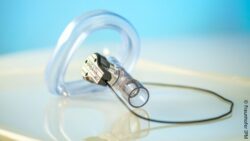
Fraunhofer IPM
Fluorescence sensor for measuring oxygen in breathing air
16/05/2024
The new sensor from Fraunhofer IPM measures the oxygen content in the air we breathe precisely and quickly, which significantly improves patient monitoring.
halfpoint
Sensor sole warns of foot ulcers
07/05/2024
A newly developed insole with sensors is designed to prevent the formation of foot ulcers.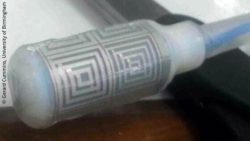
Gerard Cummins, University of Birmingham
Swallowable sensors for health monitoring
03/05/2024
Heriot-Watt, Birmingham & Edinburgh researchers develop ingestible capsule with sensors to track gut movement.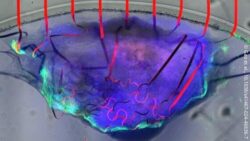
Gao et al., 10.1038/s41467-024-46636-7
Bioelectronic mesh for cardiac tissue monitoring
30/04/2024
UMass Amherst engineers develop graphene-based bioelectronic mesh to monitor movement and electrical signals in lab-grown human heart tissue.
Nanyang Technological University, Singapore
WellFeet app: Empowering diabetic patients
29/04/2024
NTU Singapore leads development of WellFeet app to help diabetes patients and caregivers track meds, activity, and diet while boosting education.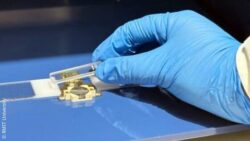
RMIT University
Optical sensor technology aims to improve diabetes glucose monitoring
16/04/2024
A new non-invasive glucose monitoring optical sensor, poised to transform diabetes management by providing pain-free glucose level measurements, has been developed by researchers at RMIT University.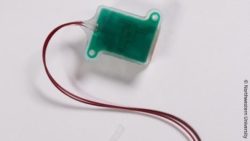
Northwestern University
A wireless bladder monitoring device
03/04/2024
A new medical device developed by researchers at Northwestern University might soon offer individuals with bladder dysfunctions a way to monitor their condition in real time, thanks to a groundbreaking implant and accompanying smartphone app.
Empa
Medical textiles and sensors enhance skin protection in healthcare
19/03/2024
In recent years, advancements in medical textiles and sensor technologies have brought about improvements in skin protection within the healthcare sector. From pressure-equalizing mattresses designed for newborns to intelligent sensor systems aimed at preventing pressure injuries in adults, these inventions have the potential to improve patient care and enhance overall well-being.
Andreas Schmitz/TU Munich
Hand prostheses: AI enables more intuitive use
05/03/2024
A network of 128 sensors and the use of AI could allow people to control their prosthetic hands more intuitively and naturally.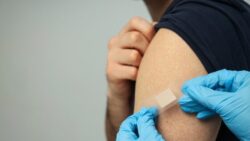
KAIST research team develops sweat-resistant wearable robot sensor
02/02/2024
In a significant technological breakthrough, a research team from KAIST (Korea Advanced Institute of Science and Technology) has unveiled a groundbreaking electromyography (EMG) sensor that promises to revolutionize the field of wearable robots.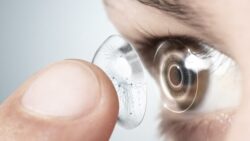
Contact lenses for early glaucoma detection
31/01/2024
Glaucoma affects approximately 70 million people worldwide and poses a significant threat to vision, often leading to irreversible vision loss if left untreated. Nearly half of those afflicted with this condition remain unaware of its presence. Typically progressing gradually, glaucoma often escapes early detection, making it crucial to develop new tools for its timely diagnosis and treatment.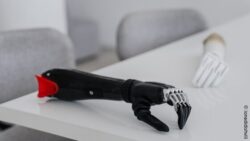
ionadidishvili
Hand prostheses: AI makes gripping more intuitive
15/12/2023
A 128-sensor network and AI enable better insight into forearm muscle patterns - improving intuitive control of artificial limbs.
feelSpace
Wearable for the visually impaired: Vibrations lead the way
14/12/2023
The German Institutes of Textile and Fiber Research Denkendorf (DITF) have developed a contacting process with which orientation aids - and e-textiles in general - can be produced more economically and conveniently.
Wireless revolution in neonatal monitoring – Bambi Medical
13/11/2023
Bambi Medical introduces the Bambi Belt, a wearable device designed for newborns that transforms vital sign monitoring in the Neonatal Intensive Care Unit (NICU). By eliminating wires, it significantly improves comfort for these vulnerable patients. As this is Bambi Medical’s debut at MEDICA, we seized the opportunity to learn more about the Bambi Belt’s numerous advantages.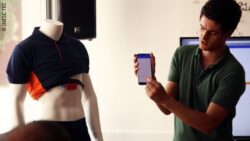
INESC TEC
How can wearables help to protect farmers well-being
10/11/2023
The AgWearCare project resorts to wearables to collect and digitalise data, supporting agricultural tasks and preventing work-related musculoskeletal disorders.
Chibelek
Partially autonomous surgical robotics
09/11/2023
The "ForNeRo" research network aims to integrate assistive robots for surgery into the operating theater.
Fraunhofer IZM / Volker Mai
ECG with a patch: APPLAUSE European collaborative project successfully completed
17/10/2023
Researchers from Fraunhofer IZM, together with 31 partners from industry and research, have developed a stretchable and wireless patch that can be used to make it possible to conduct diagnostically relevant cardiac monitoring in everyday life.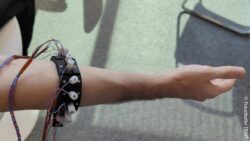
Fraunhofer IBMT
Bidirectional control of prosthetic hands
13/10/2023
Researchers at Fraunhofer are working as part of an EU research project to improve control of prosthetic hands down to individual fingers.
TU Dresden
Sensor and software to promote office staff’s physical activity
11/10/2023
TU Dresden develops office chair sensor and software to promote mindful movement and healthier habits during desk work.
Kate Myers/Penn State
Wearable sensor for continuous analysis of sweat
06/10/2023
Continuous monitoring of sweat can reveal valuable information about human health, such as the body’s glucose levels. However, wearable sensors previously developed for this purpose have been lacking, unable to withstand the rigors or achieve the specificity needed for continuous monitoring, according to Penn State researchers.
IDMT/Anika Bödecker
Vital data: the whole body on the radar
05/10/2023
Researchers at the Fraunhofer Institute for Digital Media Technology IDMT in Oldenburg have developed a new method for collecting and analyzing vital signs from the human body by using radar.
Malmö University
New sensors could replace current infection testing
04/10/2023
New technology could pave the way to a future of rapid testing in hospitals and at home for both covid and urinary tract infection. It could also be used to keep track of blood sugar levels during operations and wireless monitoring of various bacterial infections.
TUD
Diagnostics: pioneering approaches for the detection of viral antigens
22/09/2023
Scientists from the Chair of Materials Science and Nanotechnology at TU Dresden (TUD) have made considerable progress in the development of highly innovative solutions for the detection of viral pathogens in two studies they presented recently.