
Modern surgery, medical implants & medical prostheses
Our magazine articles on the subject of modern surgery, medical implants & medical prostheses


01.09.2025
How ambulatory surgery works
Multimedia report


21.11.2024
Extra-flat hearing implant
Interview


19.04.2024
Inceptiv™ against pain
Use case



28.11.2023
Organ banks and deep-freezing
Interview











Progress in medical prostheses

Modern prostheses use sensors and microtechnology to automatically adapt to different movement requirements. Lightweight, resilient materials such as carbon fiber composites and silicone improve wearer comfort and functionality and support rehabilitation.
Type of prosthesis
Field of application
Material
Target group
Leg prostheses
Replacement of the lower limb
Titanium, carbon fiber, aluminum and plastics
Persons with lower/upper leg amputation
Arm prosthesis
Replacement of arm or hand
Carbon, aluminum, silicone, plastics
Persons with amputation of the upper extremities
Hip and knee prostheses
Restoring function and pain relief to hip and knee joints
Metal and plastic components
People with severe osteoarthritis, people who have suffered injuries in accidents, people with irreparable joint damage
Breast prosthesis
Reconstruction after mastectomy
Silicone and polyurethane film (PU film)
Women after various breast operations
Facial prostheses (epitheses)
Replace missing or damaged parts of the face or congenital malformations
Silicone
Patients with defects in the facial area
Endoprostheses
Treatment of joint diseases such as osteoarthritis or after injuries
Metal alloys, ceramics or plastics (polyethylene)
People with joint diseases, people whose joints are no longer fully functional
Eye prostheses
Restoration after the loss or removal of an eye
Glass or plastic (PMMA)
Persons who have suffered the loss of one or both eyes due to various causes
Individualization of medical implants

Custom-made implants are created using digital planning based on imaging techniques and are manufactured using 3D printing. These patient-specific solutions improve accuracy of fit, shorten the duration of surgery and promote stable, tissue-conserving integration.
Minimally invasive procedures in modern surgery

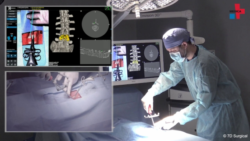
Minimally invasive procedures with robotic assistance, navigation and real-time imaging enable precise interventions with less stress.
Future trends in medical technology - prostheses, implants and surgery in transition

Future-oriented medical technology integrates sensor technology, digital networking and robot-assisted procedures. Intelligent prostheses and implants as well as AI-assisted surgery sustainably improve diagnostics, therapy and patient care.